Our Research
Dhruv's research on predicting autistic meltdowns and on how teachers are trained to support autistic students.
Areas of inquiry
Our Research Focus Areas
Developing machine learning models that use wearable-sensor data to predict meltdowns before they occur.
Reviewing the evidence on how teachers are prepared to support autistic students, informed by interviews with teachers.
Designing ways for caregivers to record which strategies work for each child, so alerts can come with personalized suggestions.
Current work
Featured research
Read the findings, methods, and supporting materials for each project.
Highlights
- The warning sign is unsteadiness, not a spike: changes in heart-rate variability were the strongest predictor, followed by skin temperature and skin conductance. Movement barely helped.
- It worked for every person: tested on each participant the model had never seen, Random Forest never scored below 0.937. Deep learning ranged from 0.41 to 0.86.
- Accuracy held steady from one to five minutes ahead (0.983–0.990), then dropped at ten minutes (0.871).
- An early version scored much higher because skin temperature drifts over the day and was acting as a clock. Removing average levels and keeping only variability fixed it.
An earlier version of this project (February 2026) reported higher accuracy. Dhruv later found that skin temperature drifting over the day was acting as a clock, and the corrected results above replace it.
Highlights
- Classroom strategies have real evidence behind them, but it's uneven. Social Stories are popular, yet only 5% of 22 studies gave strong evidence.
- Training changes practice when it explains, demonstrates, and gives feedback on the teacher's own work, not information alone.
- Confidence isn't the same as practice: training clearly raises teacher confidence, but evidence that it improves student outcomes is weakest.
- Placement isn't the intervention: what happens inside the classroom matters more than being in it. 235 autistic adults rated quality of life and safety as far more acceptable goals than making children seem non-autistic.
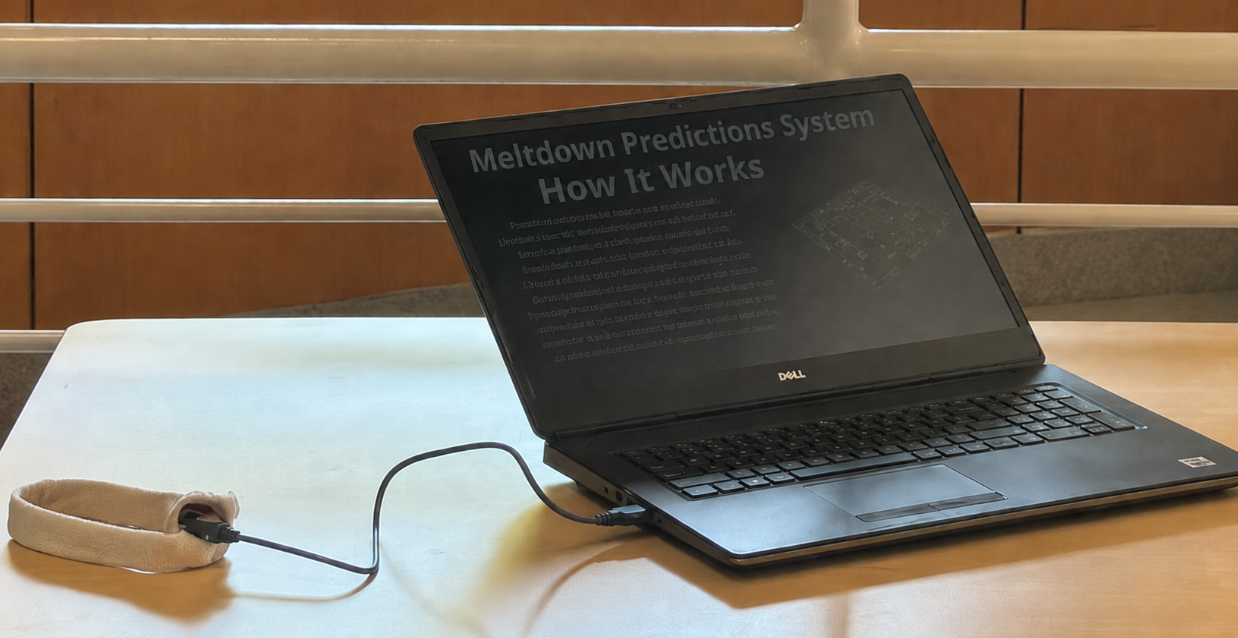
Wearable Device Creation
An early prototype wearable built to explore real-time data collection. It was not used to collect the data in the preprint.
Get involved
Interested in Participating in Our Research?
We're always looking for schools, families, and practitioners to collaborate with us on our ongoing research projects.